
"Branding" sounds expensive and vague: it seems to be about the logo, sort of about marketing, and it's never quite clear what you're actually paying for. Let's break it down honestly and in plain terms: what a brand and branding are, how they differ from a logo, what branding includes, its types, where trademarks fit in, and whether a small business needs branding at all.
Branding in plain terms
A brand isn't a logo or a picture. It's what a person thinks and feels when they hear your company's name. And branding is the work that shapes and cements that impression: through meaning, visuals, tone and how the brand behaves.
That's why two cafés on the same street, with the same coffee at the same price, sell very differently. One has a random logo pulled from a template; the other has character, a clear idea and a recognisable style. The second earns trust faster, sells more readily and is forgiven a higher price.
A logo answers "how do you recognise us." Branding answers "why should you choose us."
Brand, branding, brand application — what's the difference
Three similar words that often get confused:
- Brand — the image of a company in the customer's head. The result.
- Branding — the process of creating and developing that image: strategy + design + rollout.
- Brand application — the narrow, purely technical part: putting a finished logo and style onto physical items (merch, packaging, vehicles). It's part of the rollout, not branding as a whole.
So slapping a logo on a bag isn't branding. Branding is first deciding what the logo and style should be and why.
How branding differs from a logo and visual identity
This is the most common mix-up. Let's lay it out by level:
- Logo — a mark. A single element. (More on this — logo design.)
- Visual identity — the system around the mark: colours, fonts, graphics, applications. (More on this — visual identity.)
- Branding — all of the above plus positioning, meaning and brand voice, brought to life across real touchpoints.
A logo without branding is a signature with no person behind it. Pretty, but empty.
ABD services Turnkey branding — from strategy to ready-to-use applications We think in strategy and build with our hands. See what's included and how we work →What branding includes: the stages
Good branding doesn't start with "draw us a logo" — it starts with strategy. Here's how it's structured:
1. Analysis and positioning
Who your audience is, who your competitors are, what makes you different and why people choose you. The output is a clear statement of the brand's place in the market. Without it, design becomes guesswork.
2. Brand platform
The idea, character, tone of voice, key messages. The framework the visuals sit on — so they mean something rather than just "look nice."
3. Identity
Logo, colours, typography, graphic language, applications — the part the customer sees. (A detailed breakdown is in our article on brand identity.)
4. Brand book
A set of rules so the brand stays itself in any hands — your designer's, a contractor's, a print shop's. (What's inside and what it costs — in our article on the brand book.)
5. Rollout
Website, packaging, social media, advertising. This is exactly where branding shows up — where a real customer encounters it.
Types of branding
One word, but different jobs. The most common are:
- Product — the brand of a specific product or line.
- Corporate — the brand of the company as a whole.
- Personal — the brand of a person (an expert, a founder).
- Place — the brand of a city or region.
Small and mid-sized businesses usually need product or corporate branding — that's where they start. And if a brand already exists but has stopped working, that's not branding from scratch but a job for rebranding.
Trademarks: branding and the law
Once a brand becomes recognisable, it's worth registering its name and logo as a trademark — otherwise someone else could use them, and proving your rights will be hard. Registration requires uniqueness (another argument against template logos from generators). "Registrability" needs to be built in at the design stage, not after.
How much branding costs
The honest answer: the range is huge, because "branding" is a stretchy word. A logo from a freelance marketplace and full-cycle branding done by a team are different products, not "the same thing, cheaper or pricier." Don't judge by the price of a logo — judge by what you get: will it solve a business problem, will the system still work a year from now, will you be able to use it without its creators.
Does a small business need branding
Yes — but not all of it at once, and not "because the big players have it." A small business needs branding where it directly affects choice and trust: packaging on the shelf, the social media profile, the website's first screen, the storefront sign. You can start small — clear positioning and basic identity already set you apart from the competitors next door. The earlier the system is laid down, the cheaper it grows with the business.
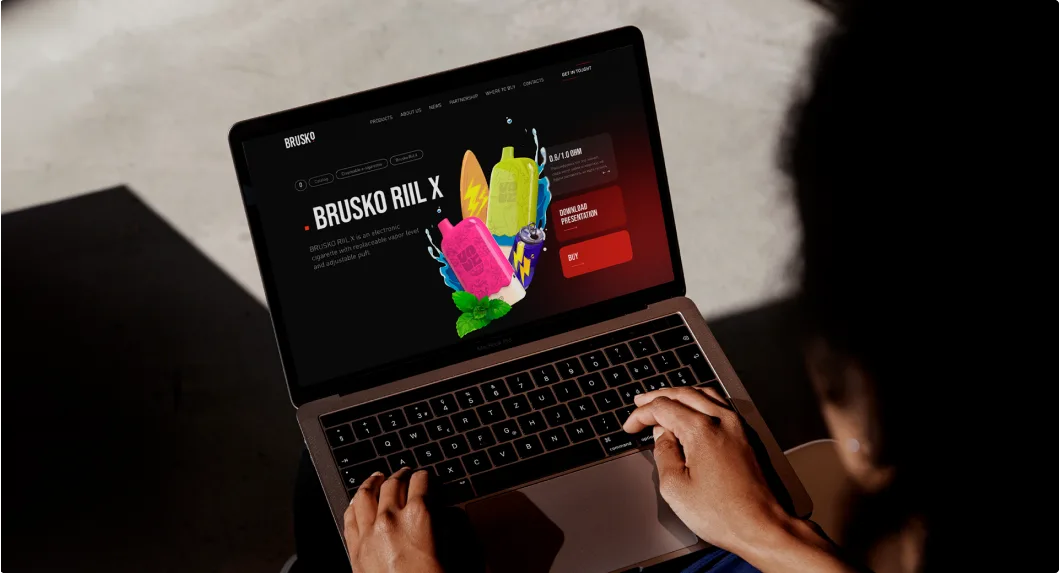 Case in pointWe built one visual language for Brusko across seven marketsa single brand for seven markets — from strategy to applications — see the case
Where to start
Not by searching for "draw me a cheap logo," but with the question "what makes us different, and who for." Answering that is half of branding; we'll help you build the rest by hand. And if you'd like a sober outside look at your current visuals — that's free and comes with no obligation.