
A company commissions a brand book, receives a slick forty-page PDF — and files it away in a folder nobody ever opens again. That's the bad-case scenario, and it happens more often than we'd like. Let's break down what a brand book really is, what belongs inside, how it differs from a guideline, how it's developed and what drives the price — so you commission a working tool, not a souvenir.
What a brand book is
A brand book is a document that sets out the rules of a brand: how the brand looks, sounds and behaves across any medium. In plain terms — an instruction manual for the brand, so that a designer, a printer, an SMM contractor or a new employee can produce materials correctly without asking you a single question.
Don't confuse the two: a visual identity is the visual system itself (colours, fonts, graphics), while a brand book is the document in which that system is described and locked down with rules. An identity can exist without a brand book — but then it lives only in one designer's head and dies the moment you change contractor.
Brand book, guideline and logo book: what's the difference
Three words that get muddled up all the time in real life:
- Logo book — rules for using the logo: versions, clear space, minimum sizes, prohibitions. The most compact format.
- Guideline — rules for the entire visual system: logo, colours, typography, graphics, media. This is usually what small and medium businesses actually need.
- Brand book — strictly speaking, it also includes the brand platform: positioning, values, character, tone of voice. In other words, it answers not just "how do we draw it" but "what do we say and why".
In practice, in Russia any of the three formats gets called a "brand book" — and that's fine. The main thing is to agree on the scope before commissioning: do you need logo rules, the whole visual system, or the system plus the meaning behind it.
What a brand book contains: structure
A company's brand book scope depends on its goals, but the working skeleton looks like this:
1. Brand platform
Positioning, audience, values, character and tone. A short section, yet it's exactly what explains the logic behind every visual decision. What positioning is and why it matters — we covered that in the article on branding.
2. Logo
All versions of the mark, clear space, minimum sizes, use on different backgrounds and typical mistakes. More on the mark itself — in the article on logo design.
3. Colour palette
Primary and secondary colours with precise values for screen and print, rules for combinations and proportions.
4. Typography
Fonts for headings, body text and accents, hierarchy, leading, and what to do when the brand font isn't available (emails, presentations).
5. Graphic language
Patterns, icons, photography and illustration style, compositional techniques — the brand's "texture", the thing that makes it recognisable even without the logo.
6. Media
Ready-made rules for key touchpoints: business cards and documents, social media, presentations, packaging, outdoor advertising, merch — the set depends on where the brand actually lives.
7. Prohibitions
What you must not do: stretch the mark, change the colours, place it on a busy background. The section that saves the most nerves.
Brand book examples: where to look and what to look for
Large companies often publish their guidelines openly — you can find and browse them: from tech brands, banks, government projects and city identities. It's a useful exercise before commissioning your own, provided you look not at "pretty" but at three things:
- Logic. Does the document make clear why the decisions are the way they are — or is it just a catalogue of pictures?
- Applicability. Could an outside designer produce a banner from this document without calling the author?
- Media. Does it show real applications — or does the system only live on perfect mock-ups?
Here's our example of why a business needs a single set of rules: a brand sold across seven markets at once — without a rigorous system it would have fallen apart within the first quarter.
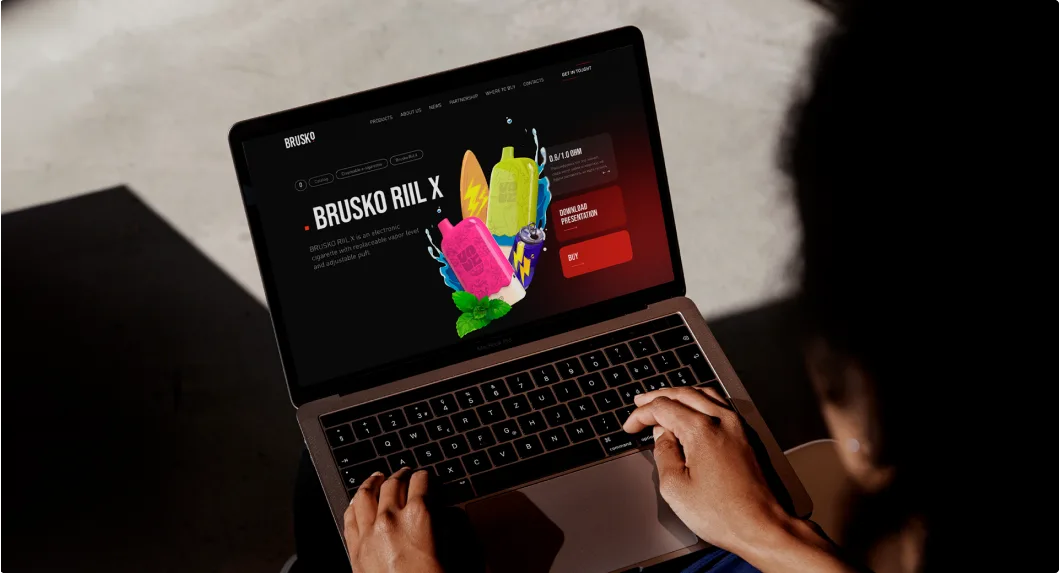 Case in pointWe built one visual language for Brusko across seven marketsa single visual language for seven markets — that's exactly what a brand book does — see the case
How to create a brand book: development stages
1. Analysis
The market, competitors, audience, existing materials. The goal is to understand what we're differentiating from and what already works.
2. Platform
We articulate positioning, character and tone. If a platform already exists — we review and refine it.
3. Visual system
Logo (new or refreshed), palette, typography, graphic language — that is, the full brand identity. Creating a brand book without this stage is impossible — there's nothing to lock down yet.
4. Testing on media
The system is tried against the brand's real tasks: social media, packaging, presentation, signage. This is where you find out whether a beautiful concept holds up or falls apart.
5. Assembling the document
Rules, examples, prohibitions — into a structured document plus source files and templates. A good finish is a short session with the team: a brand book that's been explained takes root faster.
On timelines: a logo book — weeks; a full brand book with a platform — a month or two. Faster than that means a stage got skipped.
Can you make a brand book yourself
Templates and AI let you assemble a document in an evening — and for an internal draft at the very start that's a perfectly reasonable move. The limitations are the same as with any generator: the resulting document describes pictures, not a system. It has no answer to "why this way", no differentiation from your competitors, and most often lacks the main thing — rules for the grey areas, which are the whole reason to have a brand book. The moment a brand acquires contractors and a promotion budget, a DIY brand book starts costing more than a professional one — in mistakes.
How much a brand book costs
The price of a brand book is the price of its scope, which is why the market range is enormous. The cost is driven by:
- Format: logo book, guideline or full brand book with a platform — very different amounts of work.
- Identity readiness: whether we're documenting an existing system or developing it from scratch alongside the document.
- Media: five key ones or thirty, including non-standard cases (transport, interiors, uniforms).
If you want to commission a brand book, the right frame isn't "how much per page" but "what decisions should it make without us". The answer to that question determines the scope, and the scope determines the price. We'll quote the exact cost for your task after a short conversation — it's free.
Where to start
Check yourself: if the brand's materials look different in different hands, if every new contractor "does it their own way", if the logo on the business card and on the website lead separate lives — what you need isn't "one more design" but rules. Show us what you have now, and we'll tell you honestly whether a logo book is enough or it's time to build the whole system.