Brand identity in plain terms
If a brand is what people think about a company, then identity is how that image looks and sounds on the outside. Logo, colors, fonts, patterns, the tone of messages, the design of the website and packaging — it all comes together into a single system that makes you recognizable before anyone even reads your name. That's why brand identity isn't a “pretty picture” but a tool that helps a company stay recognizable and consistent across every touchpoint.
Two words often get confused: branding and identity. Branding is the whole process: strategy, meaning, positioning. Identity is the visual and verbal part of that process — the way strategy shows up. You could say identity is the language a brand uses to talk to its audience.
What goes into identity: the core elements
When people ask what identity covers and what its parts are, they mean a set of interconnected assets. The basic elements of a brand identity:
- Logo and its variations — the main mark, monochrome versions, an icon for avatars.
- Color palette — brand colors and the rules for combining them. Queries like “identity color” and “color identity” are exactly about this: shades set the mood before any words do.
- Fonts and typography — which typeface the identity uses for headlines and body text, how spacing and hierarchy are built.
- Graphic elements — patterns, illustrations, icons, photography style. This is what makes a graphic identity recognizable even without the logo.
- Verbal identity — tone of voice, wording, slogans.
On top of this sits the applied layer: identity for the website, product cards, presentations, merch, navigation, advertising. The bigger the business, the more identity assets you have to plan for in advance.
Visual identity and website identity
A brand's visual identity is the most noticeable part of the system: what a person sees in a fraction of a second. On a website it works especially hard. The site's identity has to stay consistent with packaging, social media, and advertising — otherwise the brand splinters into several different companies in the customer's mind.
Product card identity for marketplaces is its own story. Here the visual language has to read at thumbnail size and set you apart from the dozens of neighbors in the feed. That's why, when developing an identity, we immediately test elements in real-world formats: 200×200 pixels, stories, a banner, a label.
AI identity: where it helps and where it gets in the way
Searches like “AI identity,” “identity neural net,” and “identity generator” are growing for a reason. Neural networks speed up the routine: they generate references, pattern variations, mockups, and draft cards. That's handy at the start, when you want to quickly see directions.
But AI identity has its limits. A generator doesn't know your strategy, can't tell you apart from competitors, and easily spits out something that looks like dozens of others. So AI works well as a designer's assistant, but not as a replacement for systematic thinking. A unique, defensible identity is built by a human, grounded in meaning rather than in slick generation.
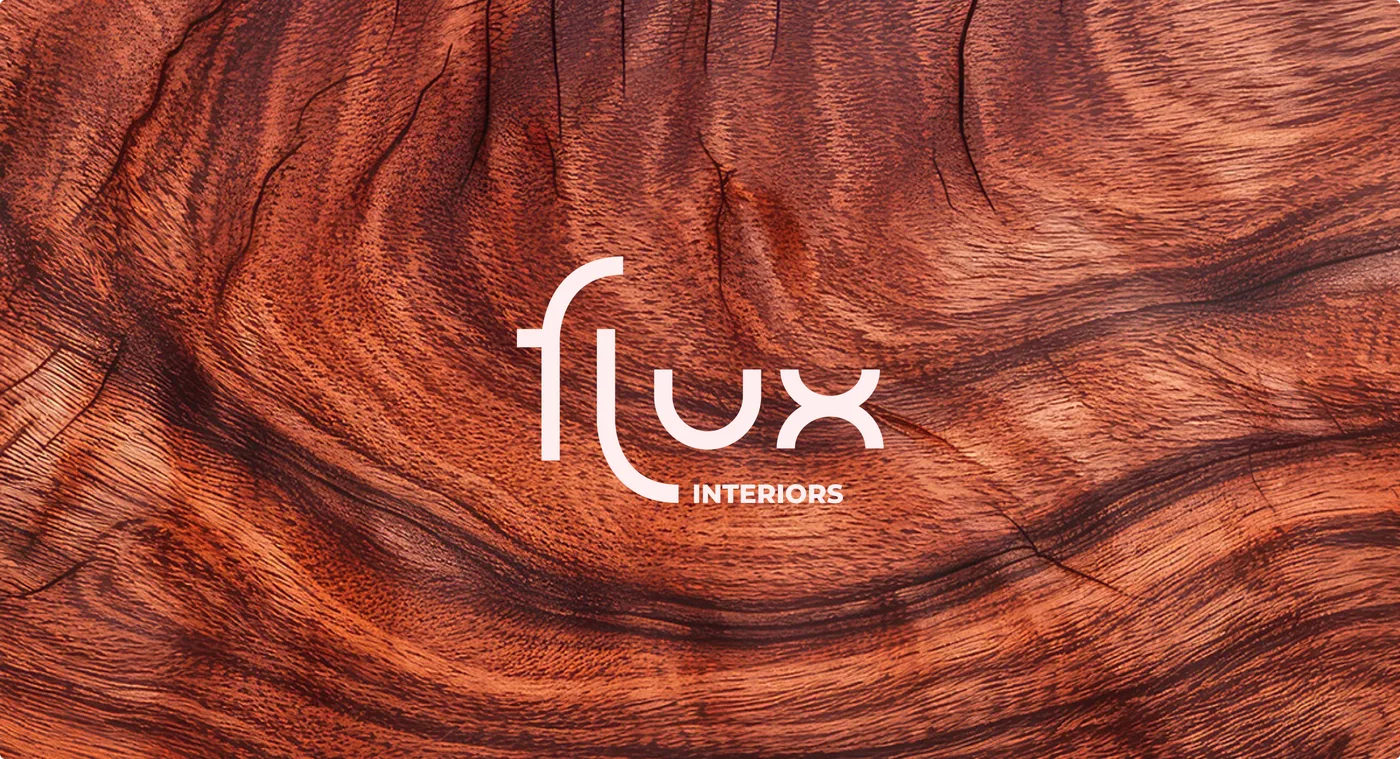 Case in pointFlux Identity — Interior Design Studioan identity built into a flexible system — see the case
How to develop an identity: the stages
Creating an identity follows a sequence so the visuals rest on meaning, not on taste:
- Analysis. We study the business, the audience, competitors, the market. Without this, an identity turns out random.
- Concept. We articulate the brand's idea and character — the foundation of its visual language.
- Design system. We develop the logo, colors, fonts, patterns, photography style.
- Assets. We apply the system to the website, cards, packaging, presentations, merch.
- Brand guidelines. We document the usage rules so the identity can scale without losing recognizability.
What it costs and who needs it
The cost of developing an identity depends on scope: a basic set for a small business is cheaper, a corporate identity with a large number of assets is more expensive. Free generators and templates handle the bare minimum but do a poor job of setting you apart from competitors.
Identity isn't just for big companies. A coffee shop, a dental clinic, a salon, a city festival, or a project — all of them benefit equally from looking polished and earning trust. If you need a brand identity built for specific business goals, this is the kind of work where meaning and design have to move together.